
How your flowers are made, from a New Zealand grower to the front door
“Made nearby” is not a slogan. Here is the whole chain behind a bouquet ordered on this site: the grower, the Tuesday-morning auction, the florist’s cool room, the hand-tying bench and the van.
When you order flowers online for someone in Tauranga or Timaru, nothing is packed into a courier box and nothing crosses the country overnight. The order goes to a florist close to the recipient, who makes it up by hand from the flowers in their own shop and drives it to the door. That is why a bouquet can be ordered at breakfast and arrive the same afternoon, and why it arrives in water rather than in cardboard. This page follows the flowers through each pair of hands they pass.
Step 1The grower
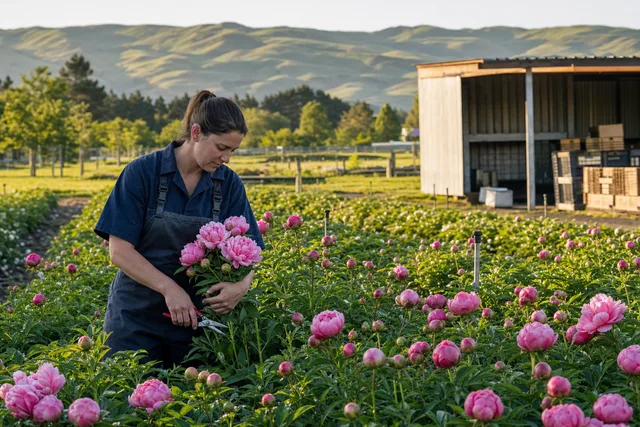
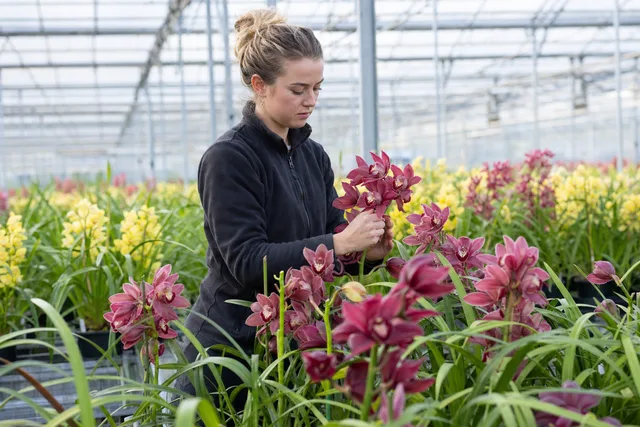
New Zealand grows a surprising range of cut flowers for a country of five million. Roses, lilies, gerberas and chrysanthemums come from glasshouses around Auckland and Christchurch. Peonies are a South Island speciality: about 40 export growers between Canterbury and Southland pick furiously for a few weeks from late October. Cymbidium orchids are grown near Pukekohe, where one large grower sends about 90% of its stems overseas. Hydrangeas were the country’s single most exported flower in February 2024, with 11 tonnes going to the United States, Japan and Hong Kong.
The number of growers has fallen for years. In 2014 the growers’ association counted only about 40 active members out of 120 on its list, with an average age of 56 or 57. The ones who remain tend to be specialists, which is why a local florist’s buckets change with the season rather than looking the same all year.
Step 2Imports fill the gaps
Local supply cannot cover every peak. Roses are the clearest case: a Kiwi summer is hard on rose crops, yet Valentine’s Day lands in the middle of it, so imports peak in February. In 2024 about 30 tonnes of roses were imported, close to half a million stems, mainly from Colombia and India. Roses and chrysanthemums are the two most imported flowers.
Every imported stem comes in under rules set by the Ministry for Primary Industries. The current import health standard for fresh cut flowers took effect on 5 November 2025. It names the approved countries (15 for roses), requires a phytosanitary certificate from the exporting country, and requires the paperwork to reach MPI at least 48 hours before the consignment lands. Private parcels are a different matter: fresh flowers are on MPI’s list of items you cannot post into New Zealand, which is why sending from abroad means ordering through a florist here.
Step 3The auction and the wholesaler
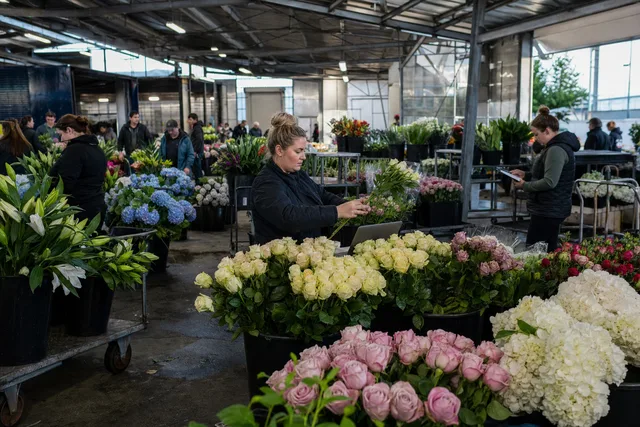
About 40% of New Zealand-grown flowers are sold through the main flower auction, which runs three days a week and has been fully online since early 2025. It brings together roughly 150 growers and 300 buyers. A florist logs in before dawn on auction mornings, sees what has been cut the day before, and bids by the bucket. The rest of the trade goes through wholesalers and direct grower relationships, which matter most for the flowers a shop uses every week.
This is also where a florist’s judgement starts to show. Stems bought at the right stage, roses still tight, lilies with one bud just cracking, give the recipient a week of flowers rather than two days. Buying is a skill, and a good florist is partly a good buyer.
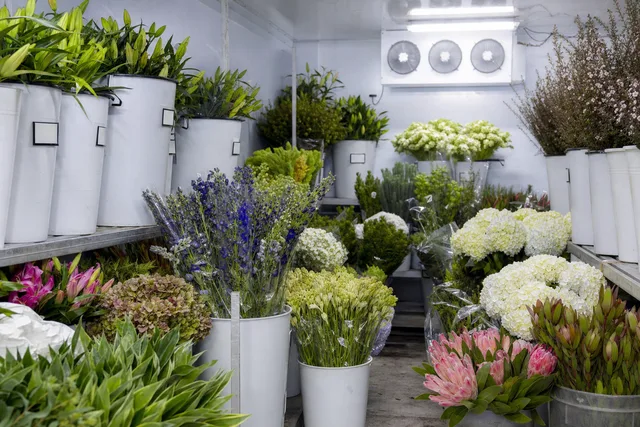
Step 4Conditioning in the cool room
Flowers that arrive at the shop are not ready to sell. They are conditioned first: lower leaves stripped, stems recut at an angle so they can draw water again, and the buckets filled with clean water and flower food. Then they go into the cool room, where the low temperature slows the flowers down and gives them back the water they lost in transit. A rose that has had a night in the cool room will outlast one sold straight off the truck by days.
Conditioning is also quality control. Stems that have travelled badly are culled here, and anything that will not make it to the end of the week is not used in an order that has to look good on arrival.
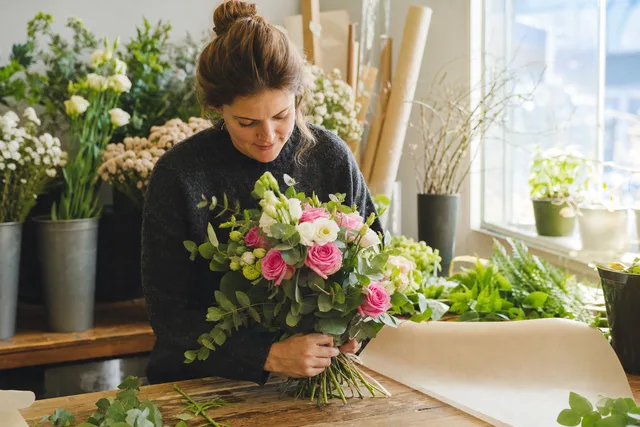
Step 5Hand-tied at the bench
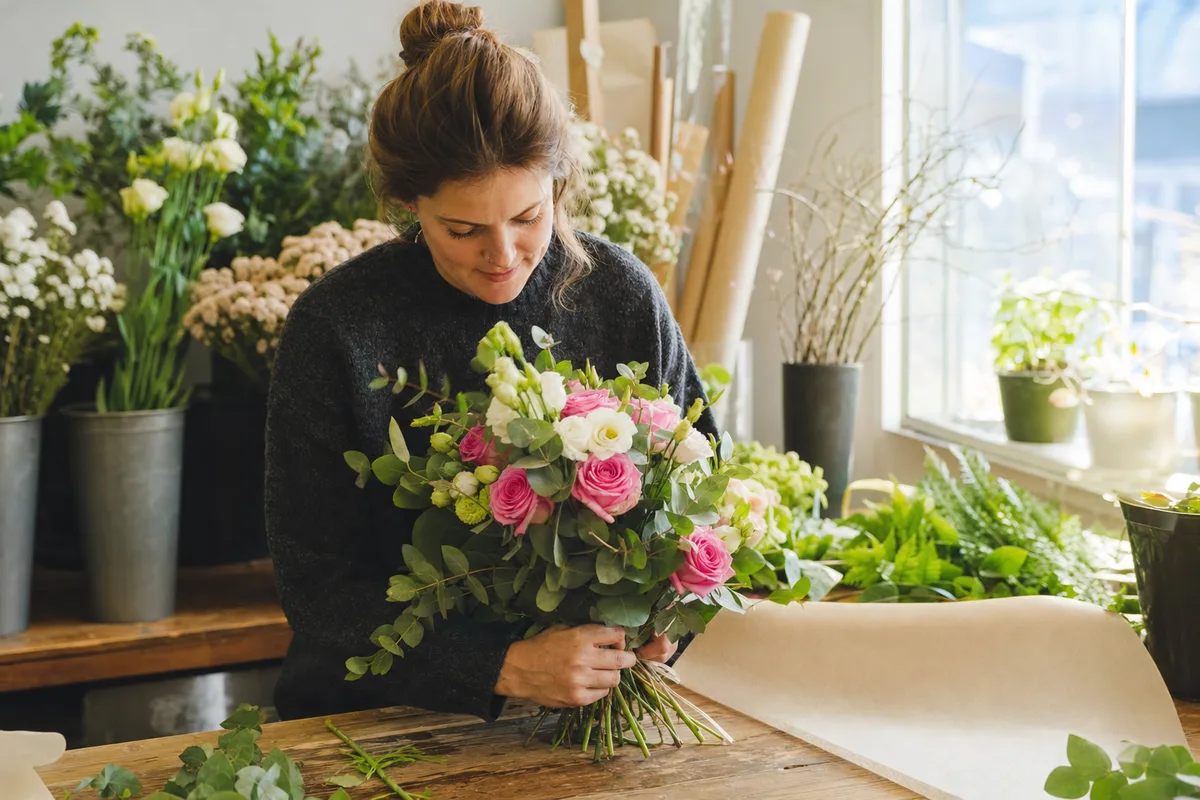
Your order reaches the florist with the style you chose, the size, the card message and the delivery date. The florist selects stems from the cool room to match the colours and feel of the design, then builds the bouquet in a spiral: each stem is added at the same angle and turned a little, so the finished bunch stands on its own, fans out evenly and can be dropped straight into a vase. Foliage goes in for shape and to protect the flower heads; the binding point is tied and the stems cut level.
The bouquet is wrapped, often with a water reservoir around the stems so it travels fresh, and the handwritten card goes in. Because every florist works from their own buckets, two bouquets of the same design made in Nelson and in Napier will share the style and palette but not the exact stems. Substituting like for like, a pink lisianthus for a pink stock, is normal and is done to keep the bouquet fresh rather than to save money.
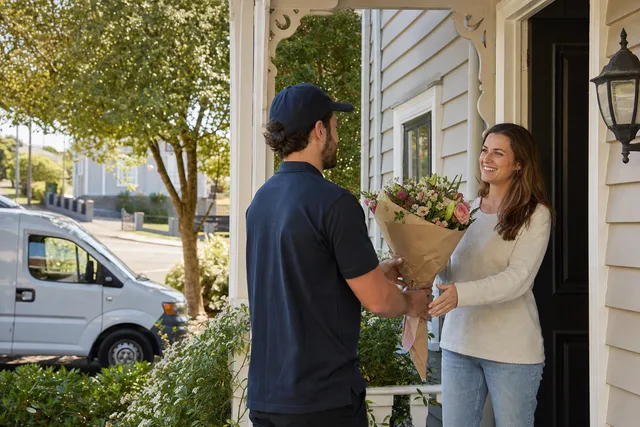
Step 6The van and the door
Delivery is the florist’s own run or a local courier they use every day. Order by 2 pm local time and most areas get same-day delivery. Rural delivery addresses with an RD number, the islands and some West Coast towns can take an extra day, and Sunday delivery depends on the town. For hospitals the driver needs the ward and the patient’s full name, and some wards do not accept flowers at all; our hospital pages quote each published rule. For funerals the flowers go to the funeral director or chapel before the service, and the funeral guide explains the timing.
If nobody is home, the driver leaves the flowers in a safe, shaded spot or with a neighbour and lets the recipient know. In a hot January that shade matters more than it sounds.
Why ordering this way costs what it does
The price of a florist-made bouquet covers flowers bought fresh that week, a trained florist’s time at the bench, the wrapping and card, and a delivery driven by a person rather than dropped by a courier. It does not cover air freight across the country, because there is none. If you want more flowers for the money, choose a seasonal design: the florist fills it with whatever is best and cheapest at the auction that week, which in spring might be peonies and in autumn dahlias. Our guide to what is in season shows what to expect month by month.
Making them last once they arrive
The recipient can double the life of a bouquet with two minutes’ work: recut the stems, use a clean vase with the flower food sachet, keep it away from fruit, heaters and direct sun, and change the water every second day. Lilies should have their pollen anthers pinched out, and households with cats should avoid lilies altogether; see pet-safe flowers. The full checklist is in our flower care guide.
Ready to send? A florist near the recipient makes it up today.
Browse bouquetsOrder by 2 pm on weekdays (11 am Saturdays) for same-day delivery in many areas